

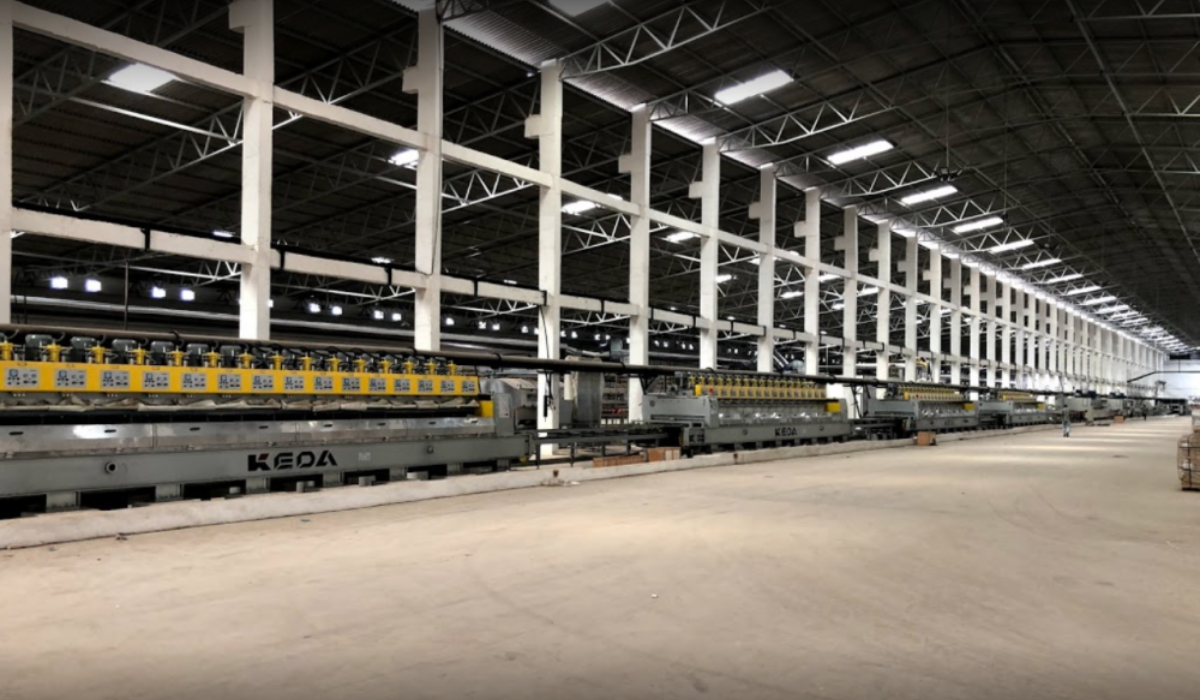
The ceramic industry in Gujarat’s Morbi district risks a production shutdown due to gas supply disruptions as a result of escalating tensions in the Middle East, affecting shipments passing through the Strait of Hormuz. This delay is having significant consequences for India’s 650 billion rupees (£5 billion) tile and ceramics industry both domestically and abroad.
Morbi is one of the world’s largest ceramic manufacturing hubs and is key to fulfilling India’s tile export orders. The cluster’s roughly 800 ceramic units, producing tiles, sanitary ware and other products, are heavily reliant on propane and natural gas to fire its kilns. It has been reported that several manufacturers that were using propane have already shut down or are close to shutting down operations due to shortages. Some companies that depend on natural gas have begun receiving force majeure notices from suppliers, forcing them to suspend production.
Hitesh Detroja, chief of Lexus Granito, said to Reuters: ‘Restarting production without certainty of fuel availability is economically unviable. The present situation could possibly be worse than the COVID‑19 period for the industry.’
‘If there is no proper guideline on gas availability and the supply does not normalise, we foresee that around 400 more propane-powered units may shut down by next week,’ Manoj Arvadiya, President of the Morbi Ceramic Association, warned reporters. ‘If the fuel supply situation does not improve, all ceramic units in Morbi will observe a collective shutdown after March 15th.’
Regarding exports, Manoj Arvadiya has said: ‘The export orders that we had already produced are ready, but they cannot be dispatched. Many new export orders have also been put on hold.’